
About
the studio
Sam Slater Art Studio is a collaboration between my wife and I.
Erin is also an artist and until recently worked in healthcare*. She's the engine for the studio and keeps everything ticking along. She also collaborates on parts of the design process.
We’re a good team because, well, we try not to take ourselves too seriously.
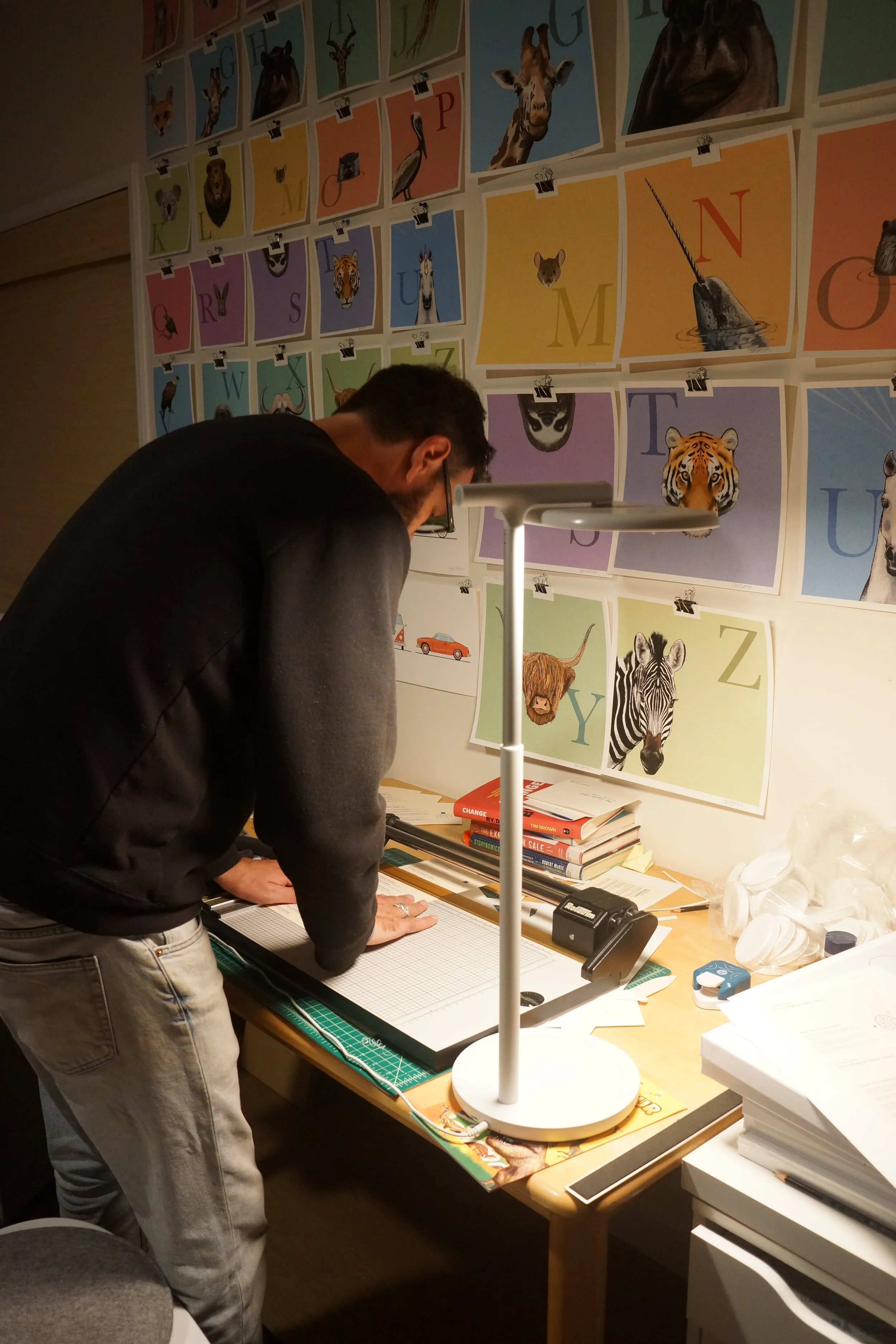
I’m a London-born and raised, California-transplant
I’m a classically trained artist, designer and architect. I ended up working in tech for over a decade**, bringing all three disciplines together to figure out the best way people can work together in the workplace. It was fascinating!
Sam Slater Art Studio was created when I realized my artistic self was not being nourished.
I love to create art that is fun, bright and sometimes cheeky. So when you look at your wall and see my print, you think: I really freaking love that.
I also love public art, and have done a variety of commissions.
I think that public art is deeply underrated and love the opportunity to collaborate on projects. I designed an art car for Burning Man, and recently completed a 200-foot long concrete relief in Greenville, California retelling the story of the valley as part of their rebuilding efforts after the devastating Dixie Fire.
I’m open to collaborations, design work, and commissions!
Please email me sam@samslaterartstudio.com so we can set up a time to talk about your project!
Random work facts
*Before working in healthcare, she did some temp work at a factory that made tuxedos for wine bottles 🤷🏻♀️
**Prior to working in tech, I had a lot of random jobs, trying to make ends meet. There was a Bovine Tuberculosis Hot Line and that time I handed out chocolate samples at grocery stores.
About
the artist
Important Things to Know About Our Studio and Prints
The Studio
Sustainability
We take sustainability seriously. While no system is perfect, we are striving to cut down excess waste and use sustainable practices whenever and wherever practical. Below are the first steps we have taken towards these goals.
We do not use AI; our work is 100% original.
Our studio is solar powered!
If you receive a postcard from us, the stamp ink is made from algae!
We use Aurora White 300 from Red River Paper, which is 100% fiber made from cotton linters. According to their website: “These linters are considered ‘recovered fibers by the EPA’. By using linters, Aurora production is putting to use what would have been waste”.
We upcycle or reuse shipping materials whenever possible.
Our receipts are printed on 100% recycled paper
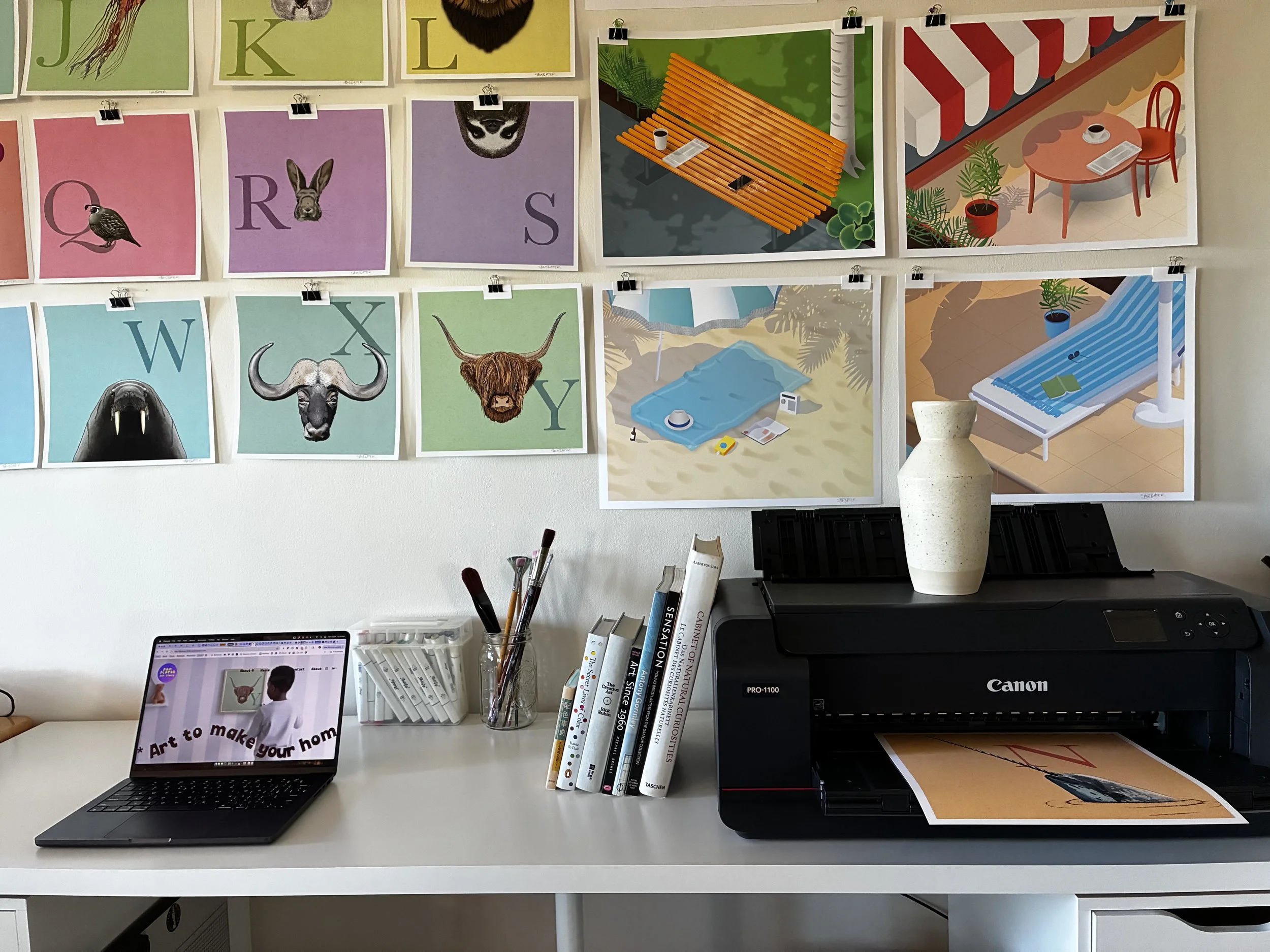
We do all of our own printing, in-studio and on-demand to reduce excess waste.
Contact
For questions about commissions
For questions about everything else: orders/prints/wholesale pricing please email
Returns
We take pride in the quality and craft of our prints, but accidents can happen when they are their way to you. If your new art gets damaged in transit, please email info@samslaterartstudio.com and we’ll arrange a replacement.
However, we cannot accept returns on prints that have been damaged by opening with sharp instruments (e.g. knife, scissors).
Prints
Print quality and paper
Each print is giclée printed in our studio on acid-free Red River museum-quality paper, Aurora White 300, a 100% cotton fiber.
Each print is signed by the artist, with a certificate of authenticity included.
Care and Display
To preserve the beauty and value of this artwork, please follow these care and display instructions.
Handling instructions
Do not use a sharp instrument (e.g. knife, scissors) to open your package once received. In doing so, you may cut the print.
Use clean hands or gloves to prevent transferring dirt or oils to the print.
When handling it, support the print with two hands to prevent bending or creasing.
Flattening the Print
When you are ready to frame/display your print, you may have to flatten it first. Note that the higher the humidity where you live, the easier it will be to flatten the print.
You can flatten the print under books, or do the following:
Roll the print back up, the opposite way that you received it (eg if its rolled with the image facing in, re-roll it with the image facing out) and put it back into the tube for about 30 minutes.
Take the print out and lay it flat for a few minutes.
Framing
Archival-grade acid-free materials (matting, backing board, adhesives etc) are essential for long-term preservation. Professional archival framing is recommended.
Ideally, use UV-protective glazing to prevent color fading over time. Always keep prints under glass, or plastic.
Use a mat or spacers to prevent contact between the print and the glass. This prevents moisture buildup and keeps the print from sticking to the glazing.
Display
Avoid direct sunlight and harsh light to prevent irreversible fading.
Avoid hanging it in rooms with high moisture, like bathrooms, or near heat sources, like radiators and avoid exposure to smoke.
Ensure proper room ventilation where you hang it to deter mold or mildew growth.
Cleaning
To remove dust, use a soft, dry, lint-free cloth. Do not use a feather duster.
Do not use water, solvents, or any cleaning sprays on the print, as they will damage the inks and paper.